The Night of Time
21 May 2026 – 27 June 2026
Institute of Contemporary Art-Sofia
Curator: Aksiniya Peicheva
The exhibition The Night of Time explores the preservation of memory and the nature of the artifacts left behind by this process of preservation. Its title derives from a passage in Hydriotaphia, Urn Burial by Sir Thomas Browne, a book devoted to burial practices, whose full quotation reads: “The night of time far surpasseth the day, and who knows when was the Æquinox?” According to Browne, the ritual of burials offers only the illusion of a “deceptive permanence,” while the preservation of memory depends upon the artifacts themselves, left at the mercy of time and chance. In this sense, Radostin Sedevchev’s work engages precisely with those memory objects that remain after our physical presence has seized to exist, and above all with the transformations to which they are subjected. The exhibition intertwines archival images drawn from personal histories — family photographs alongside found or anonymous ones. All of them undergo various kinds of metamorphosis, analogous to the transformations experienced by funerary objects buried under-
ground. The results of these processes are presented in different ways throughout the exhibition.
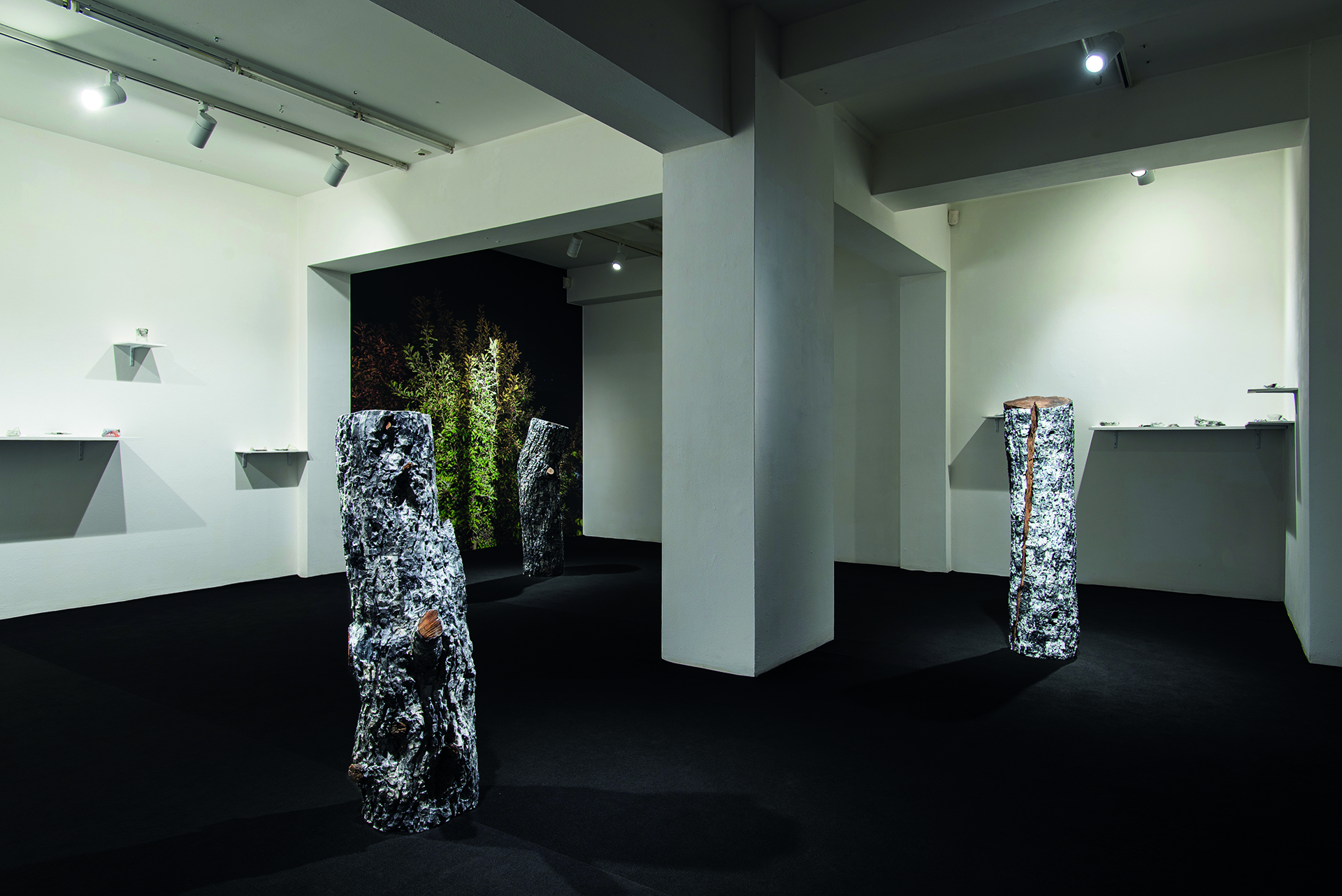
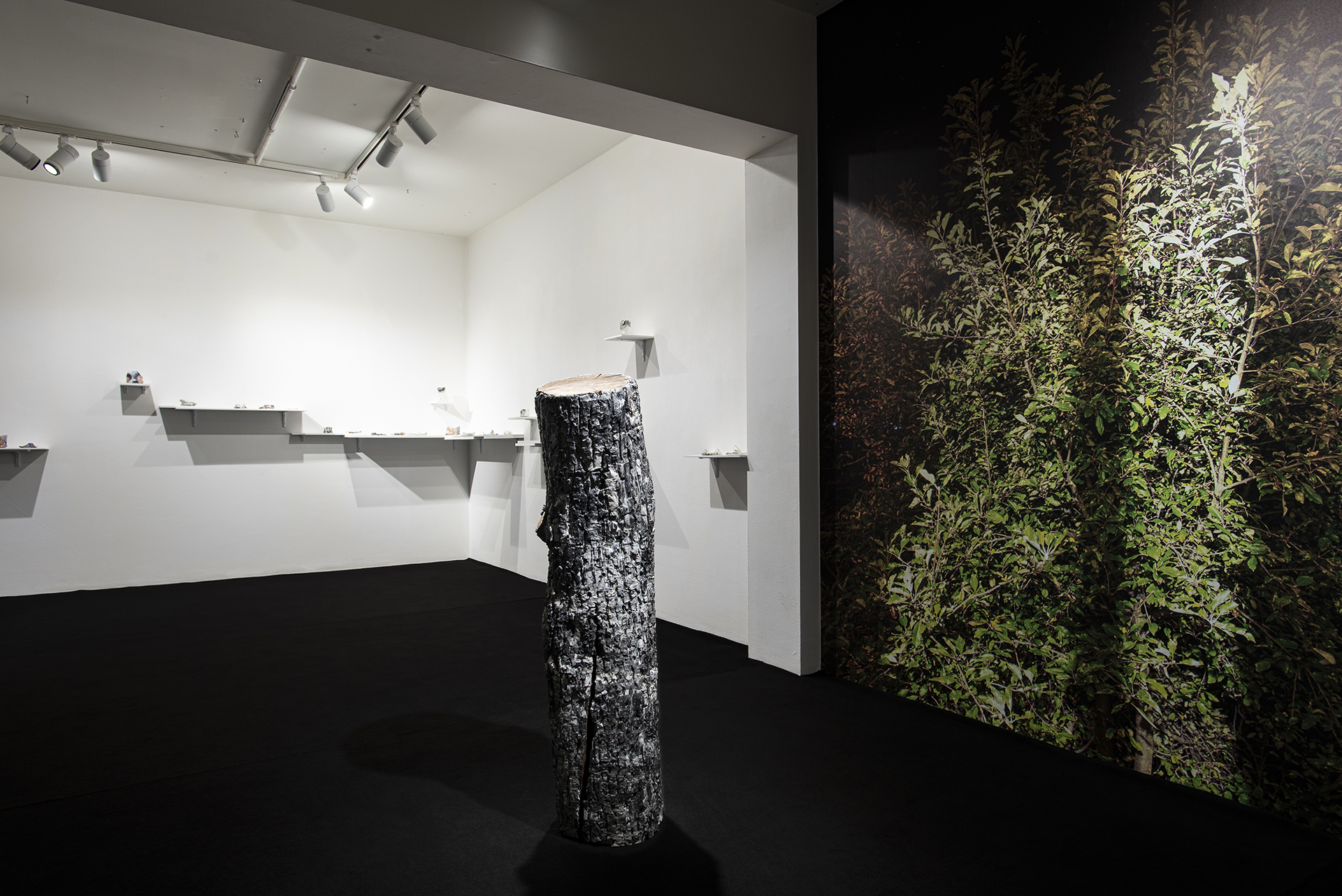
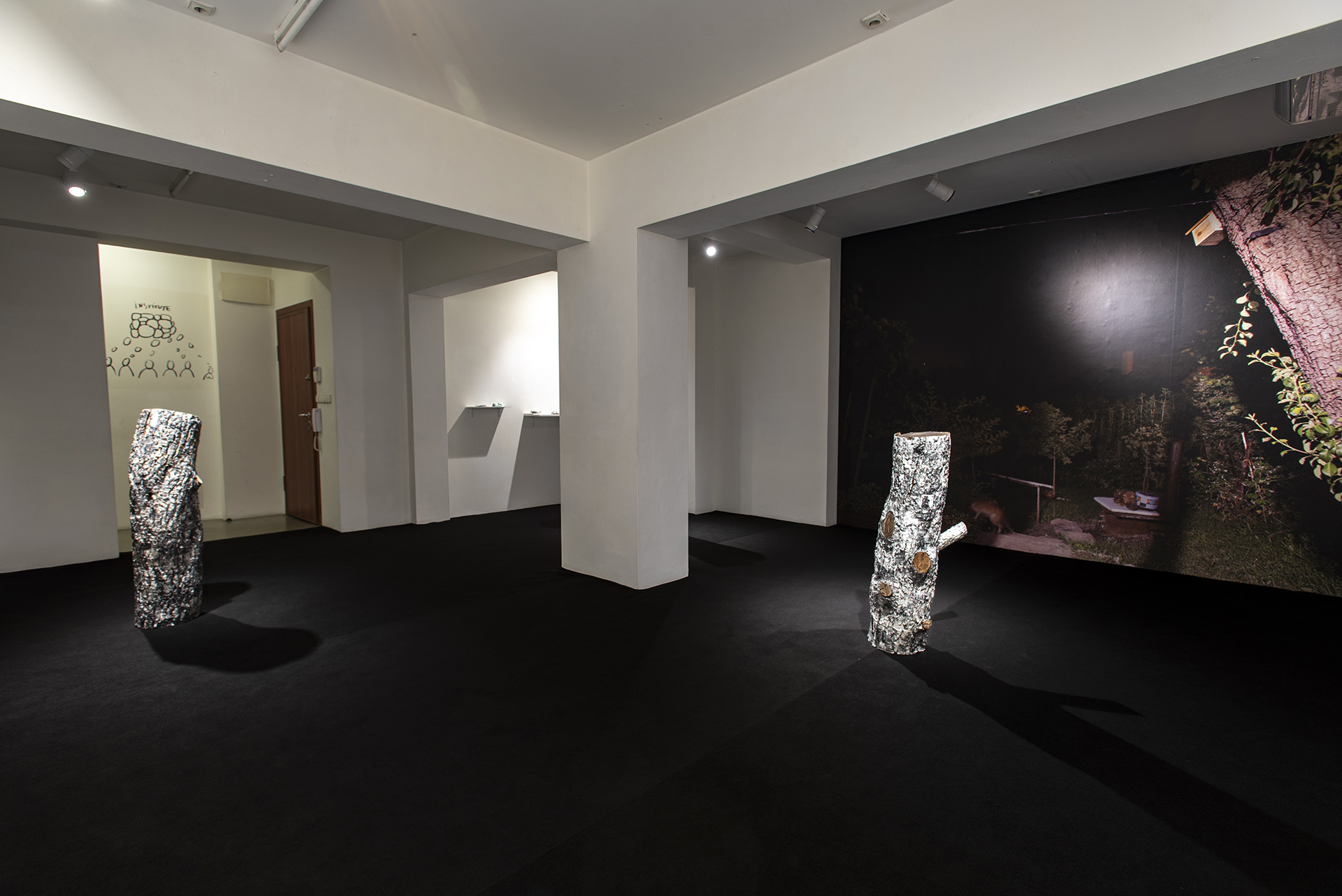
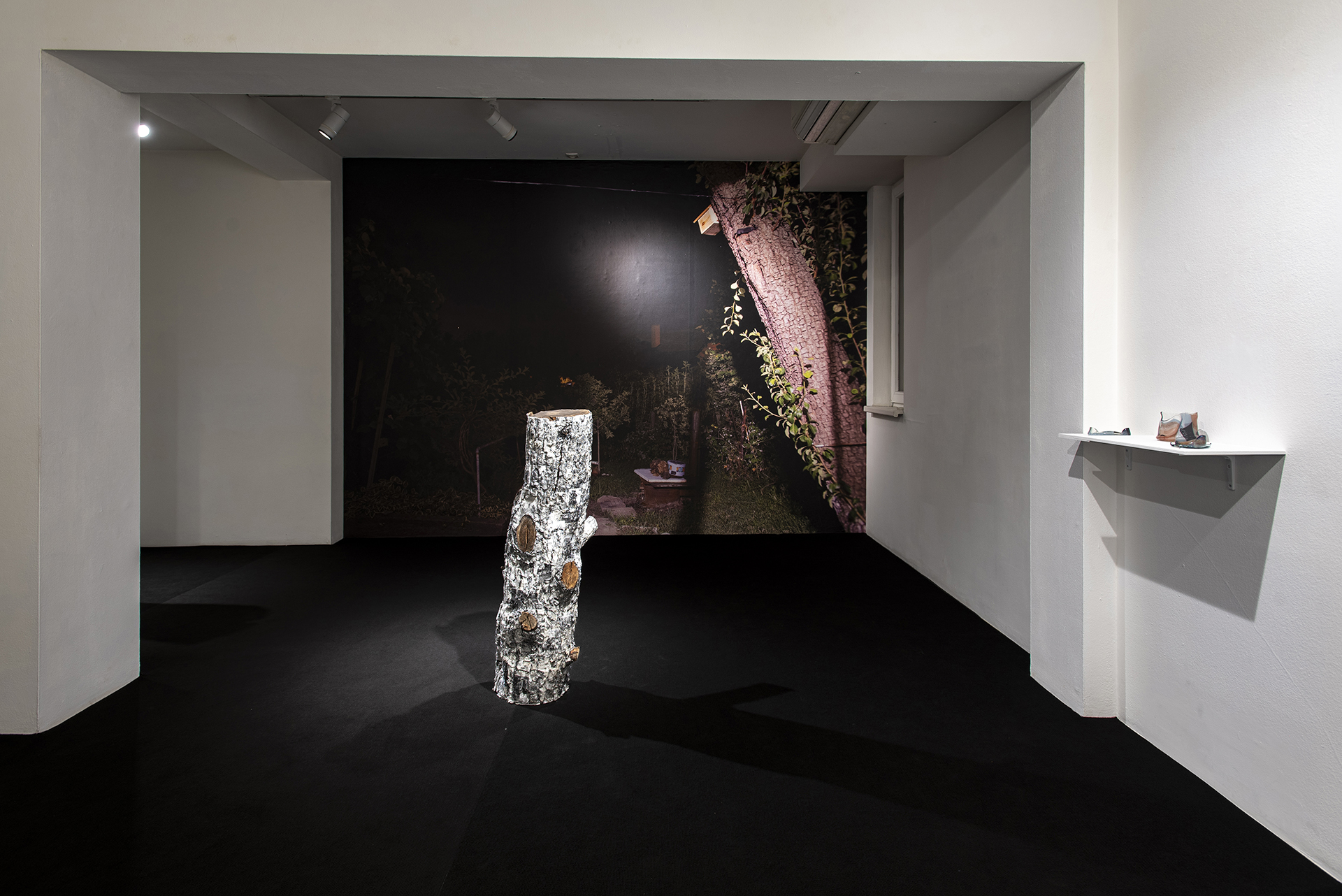
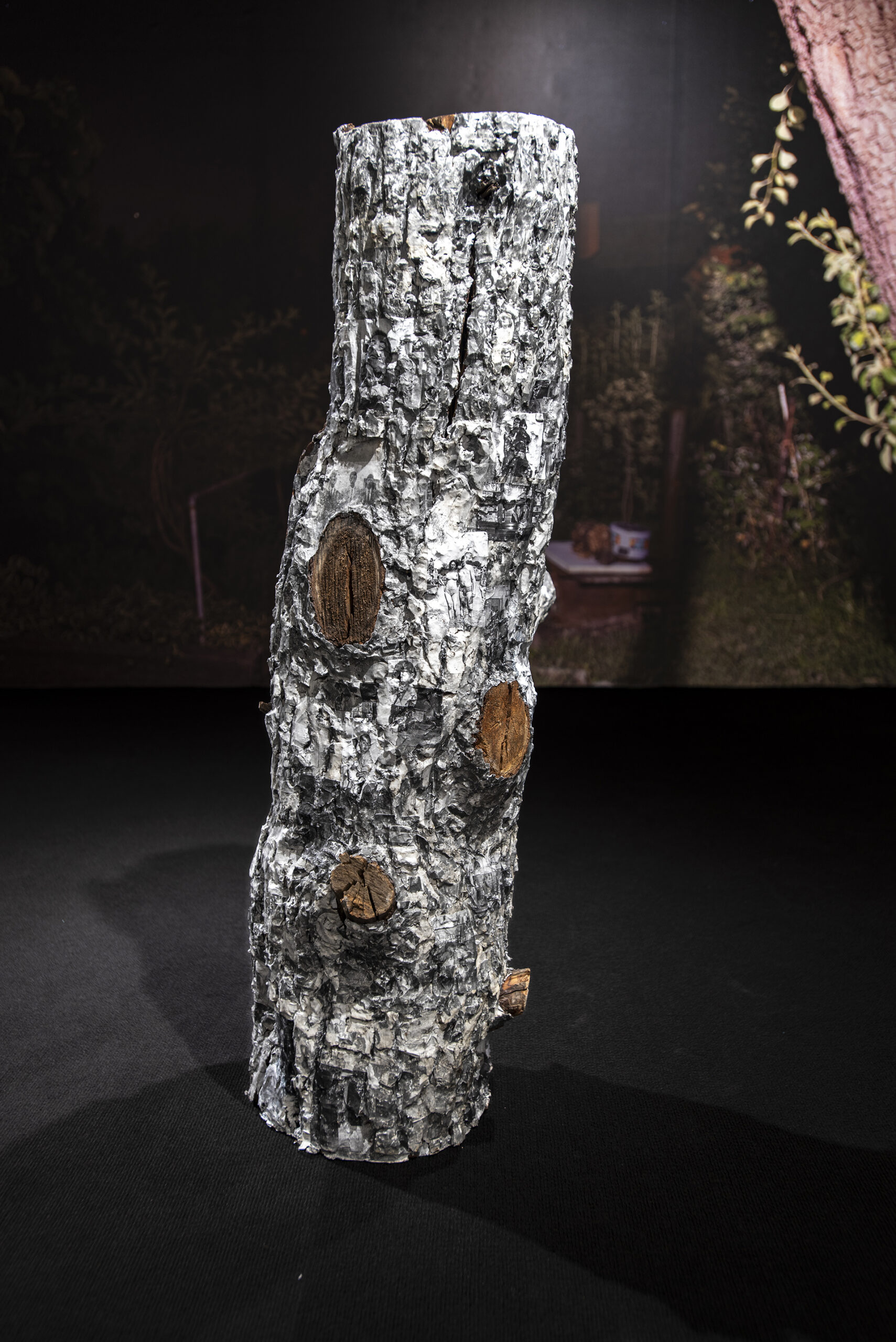
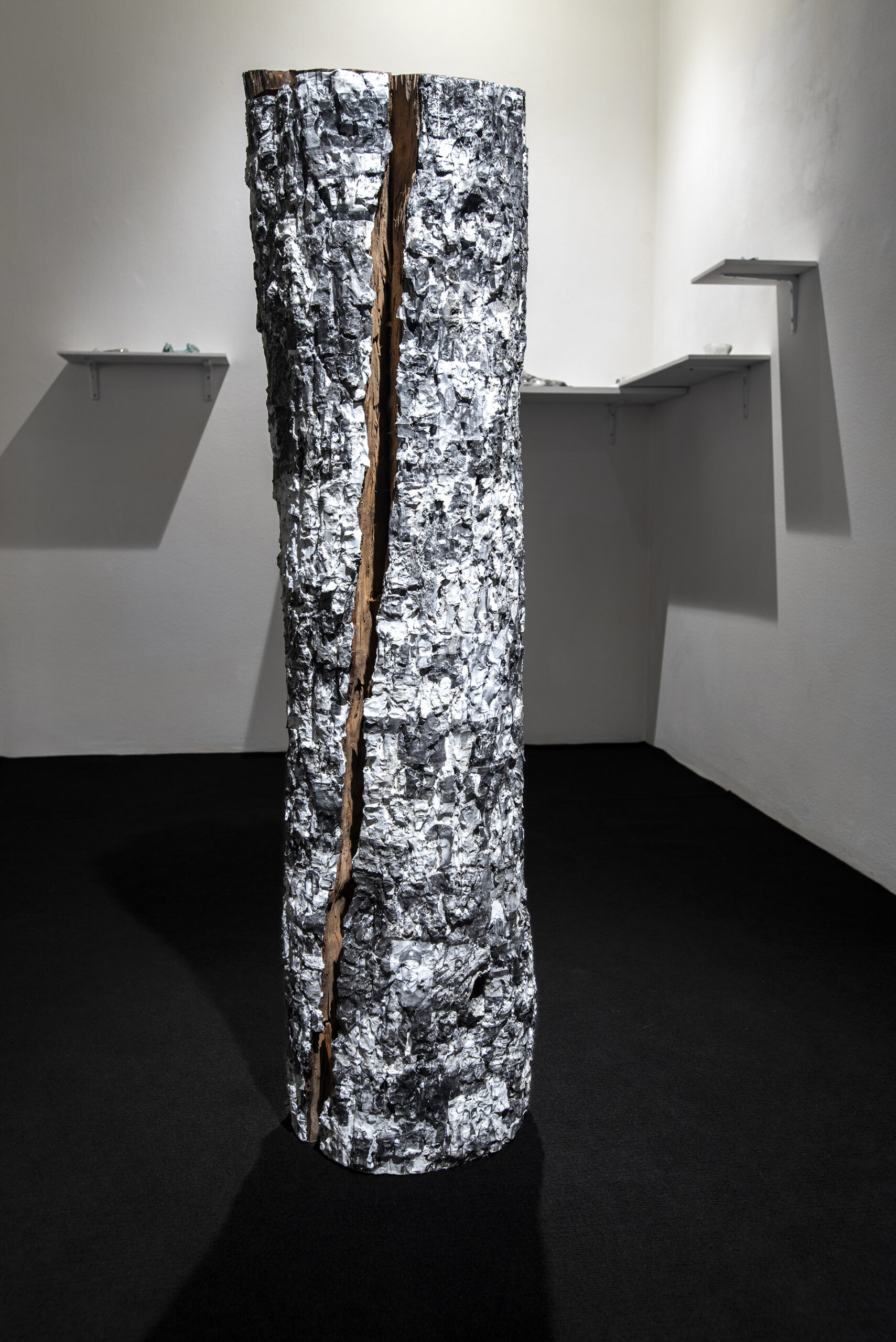
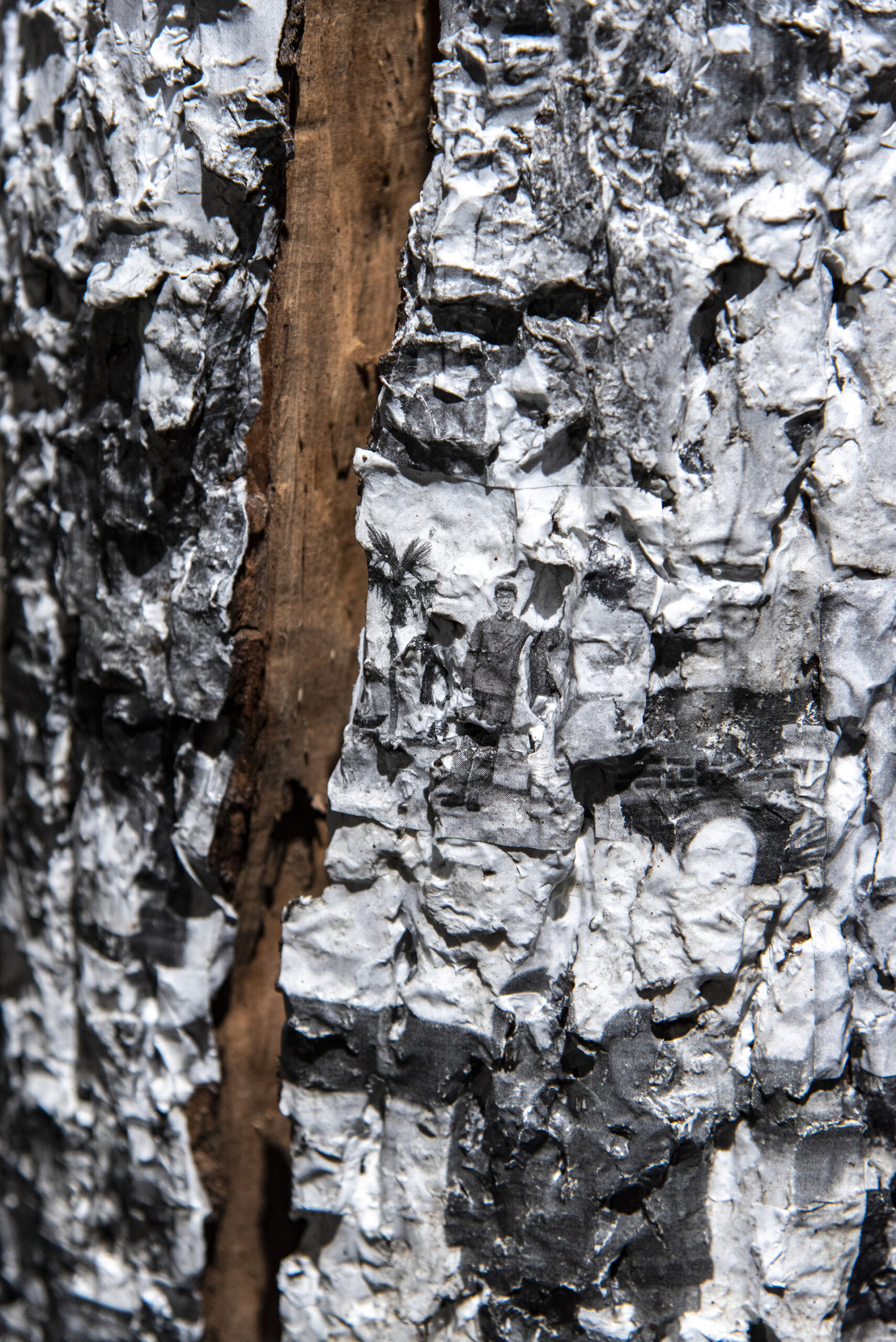
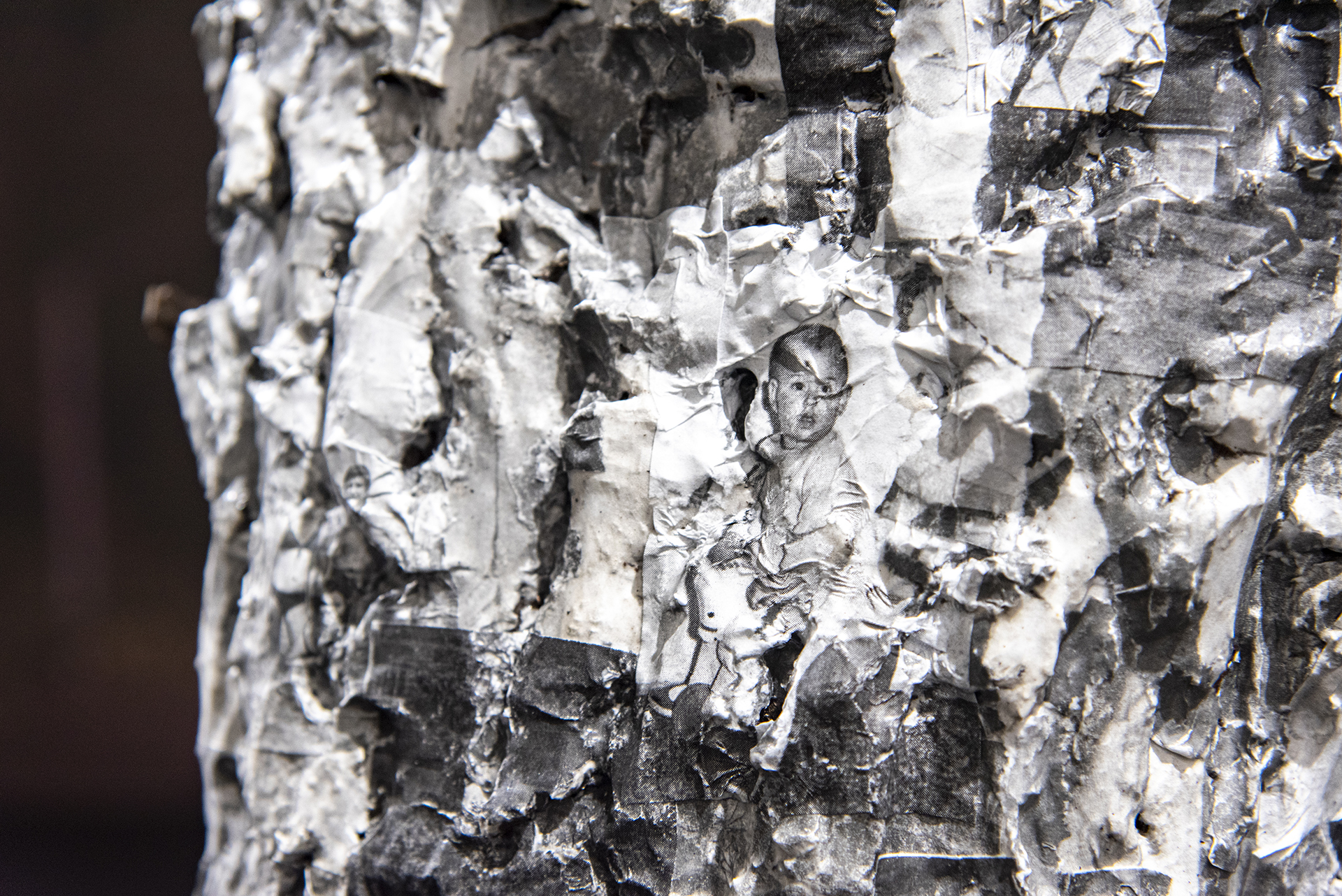
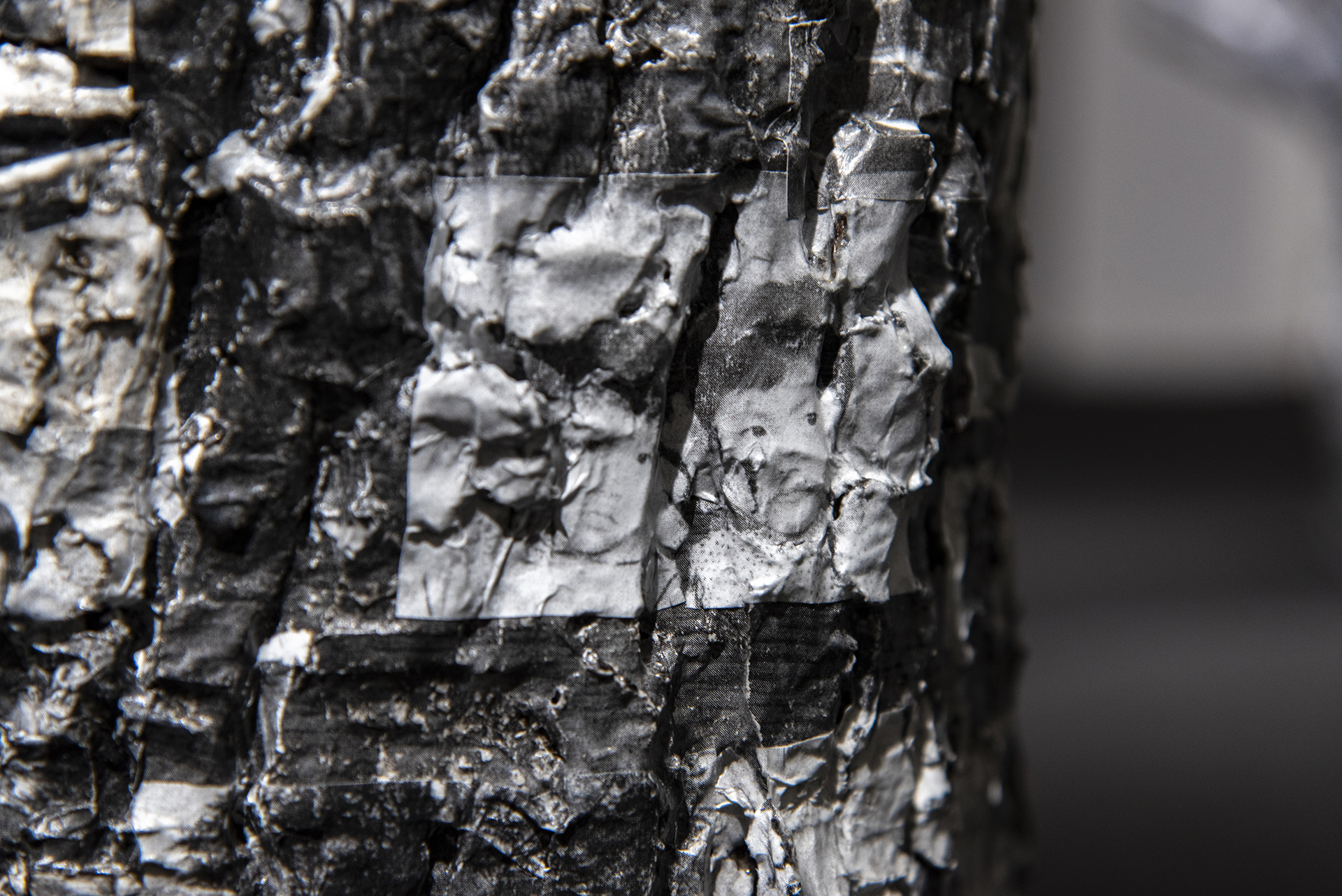
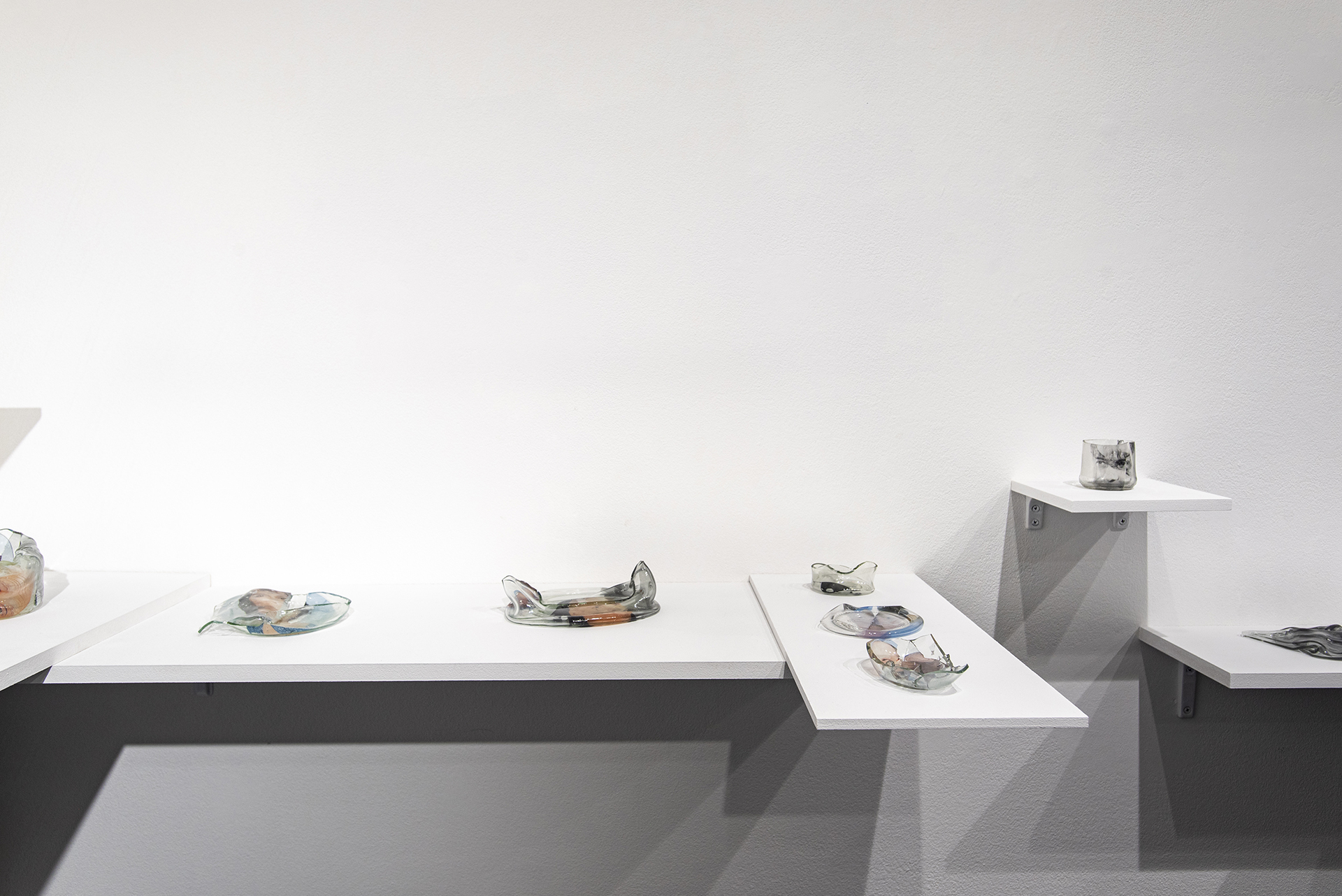
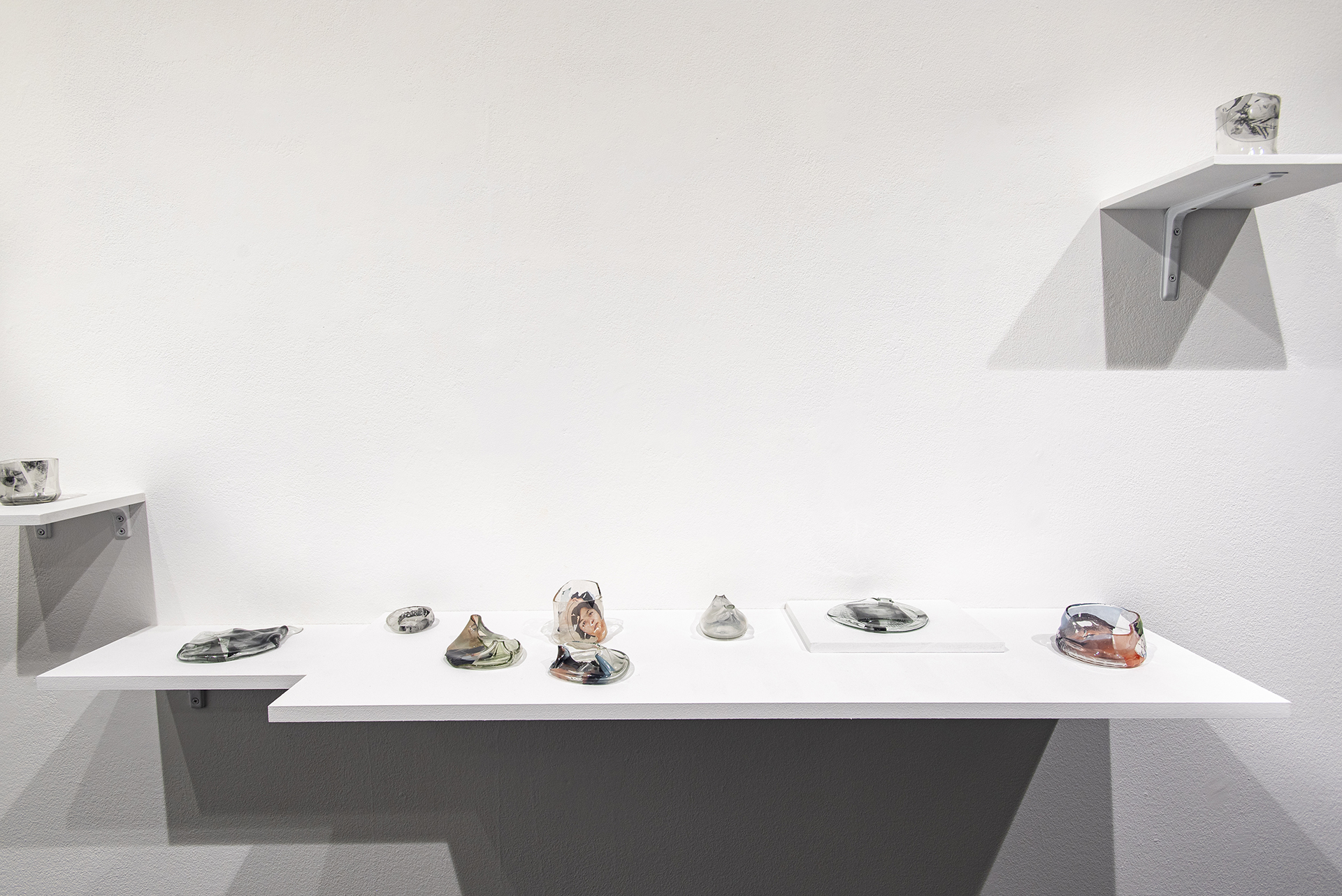
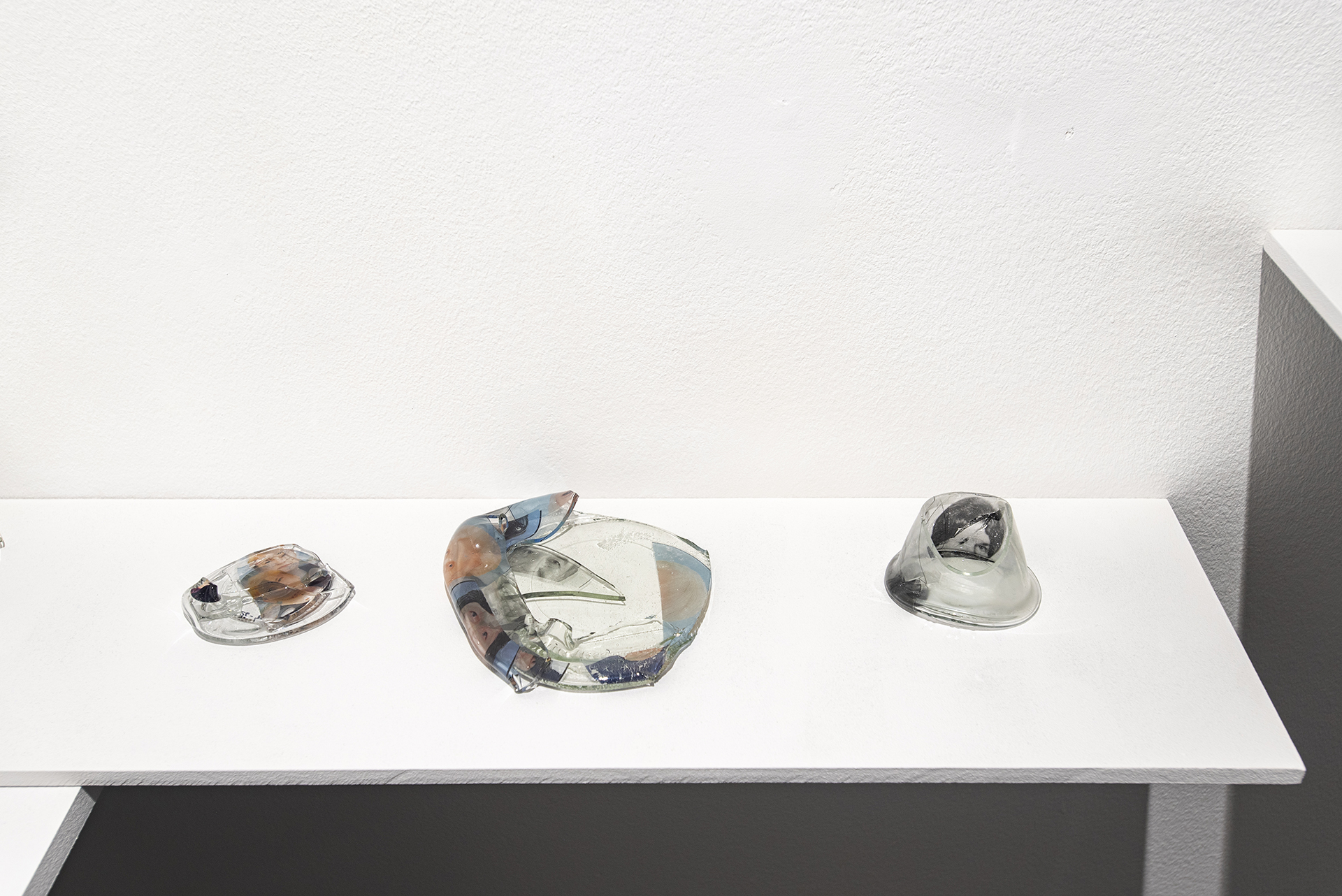
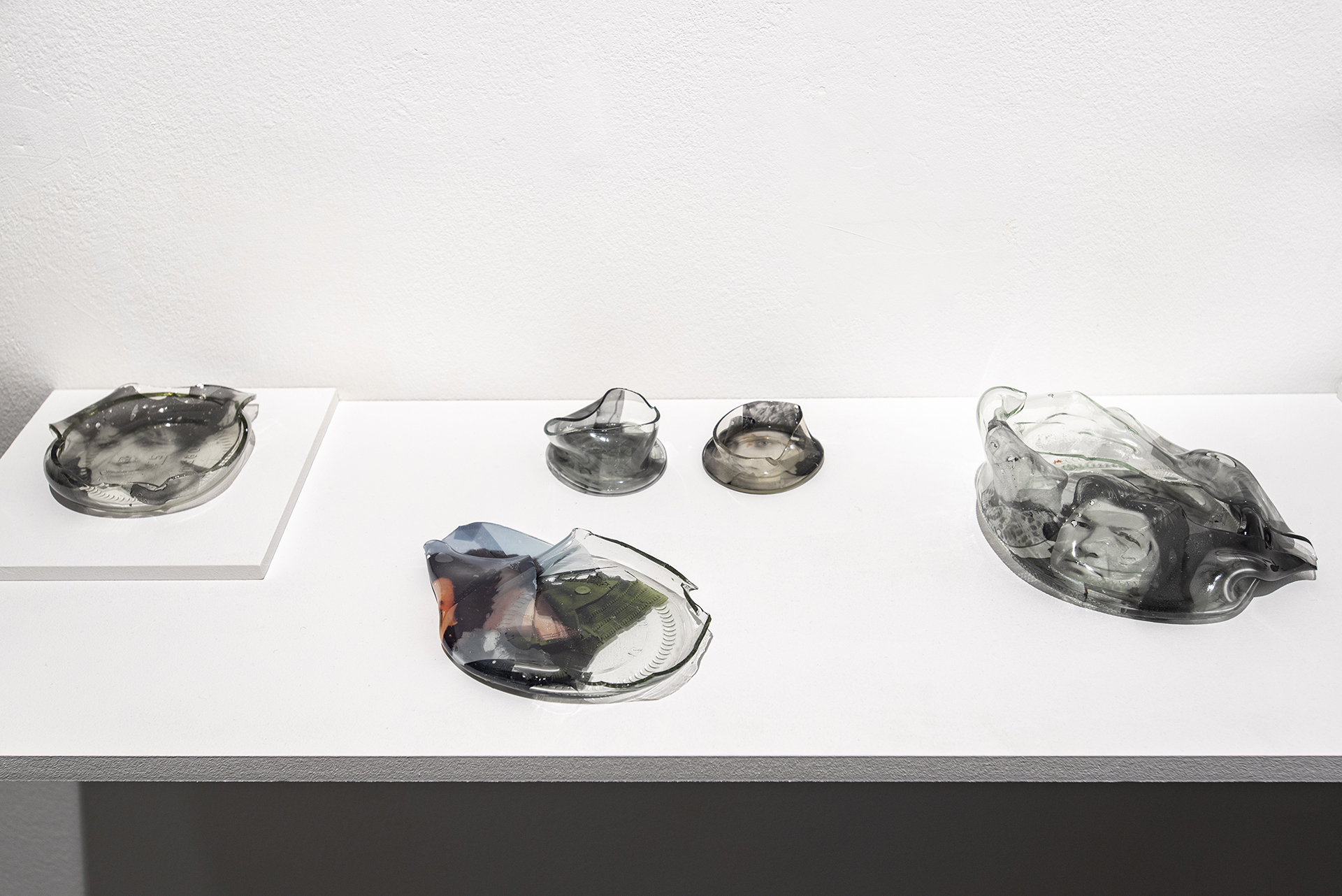
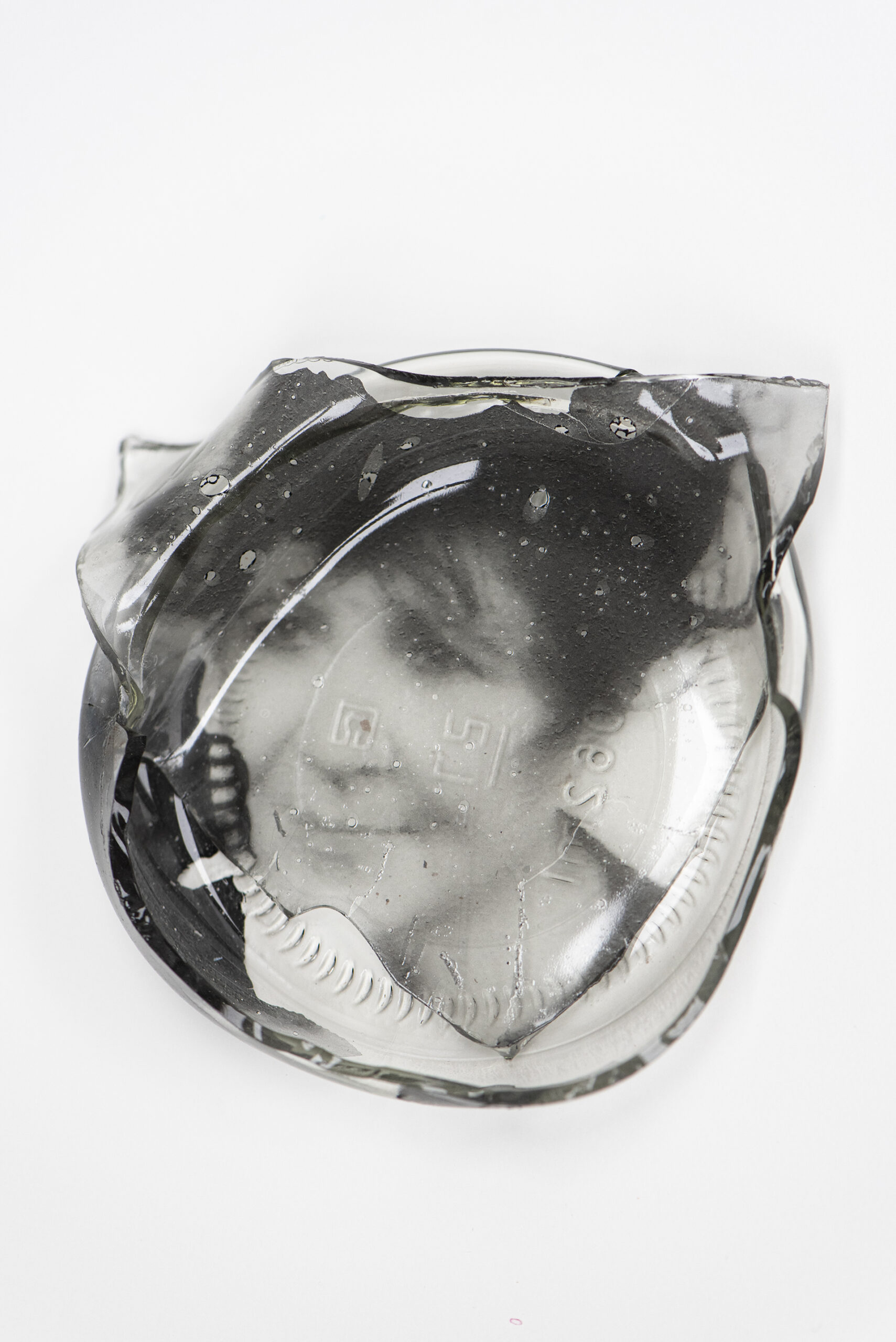
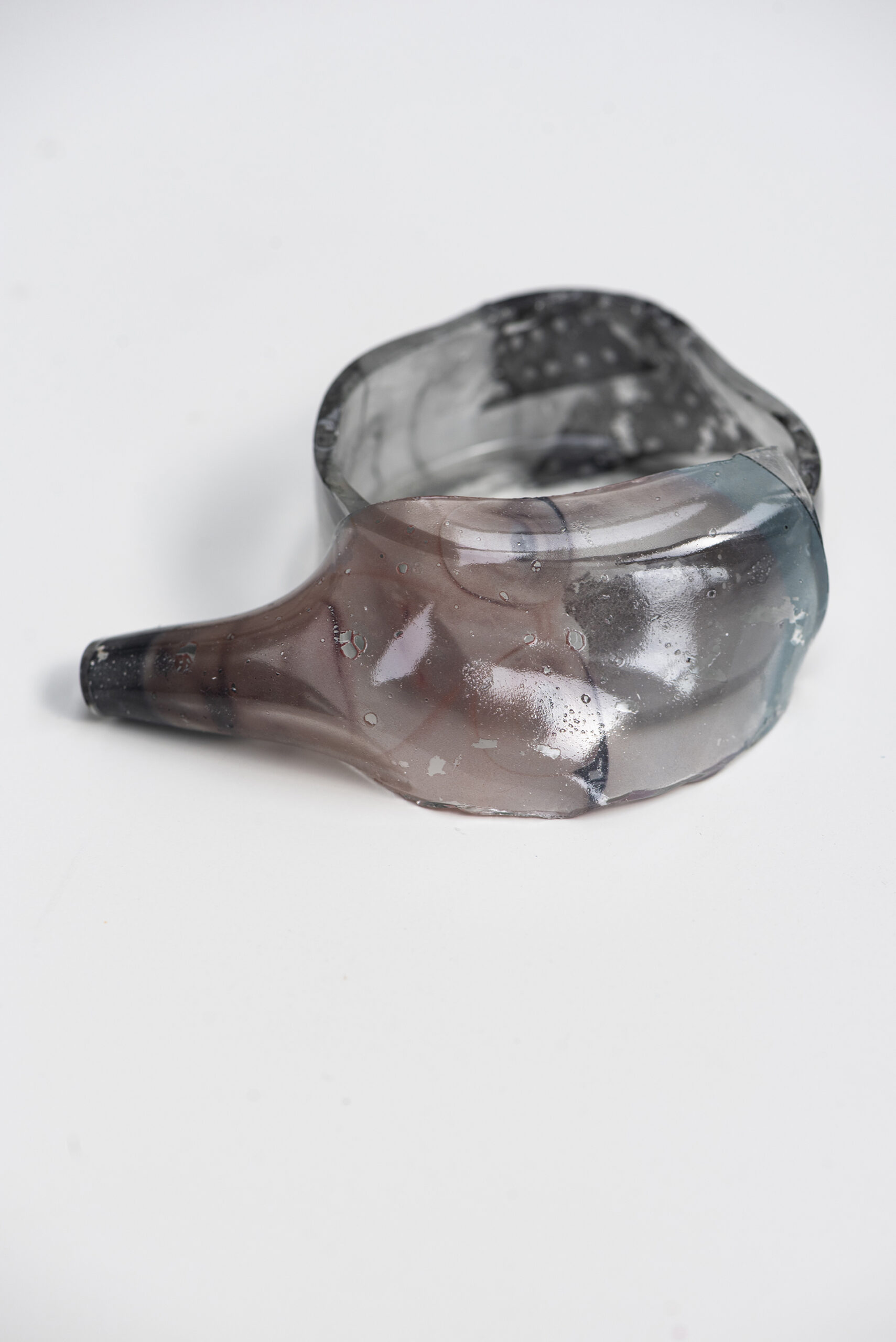
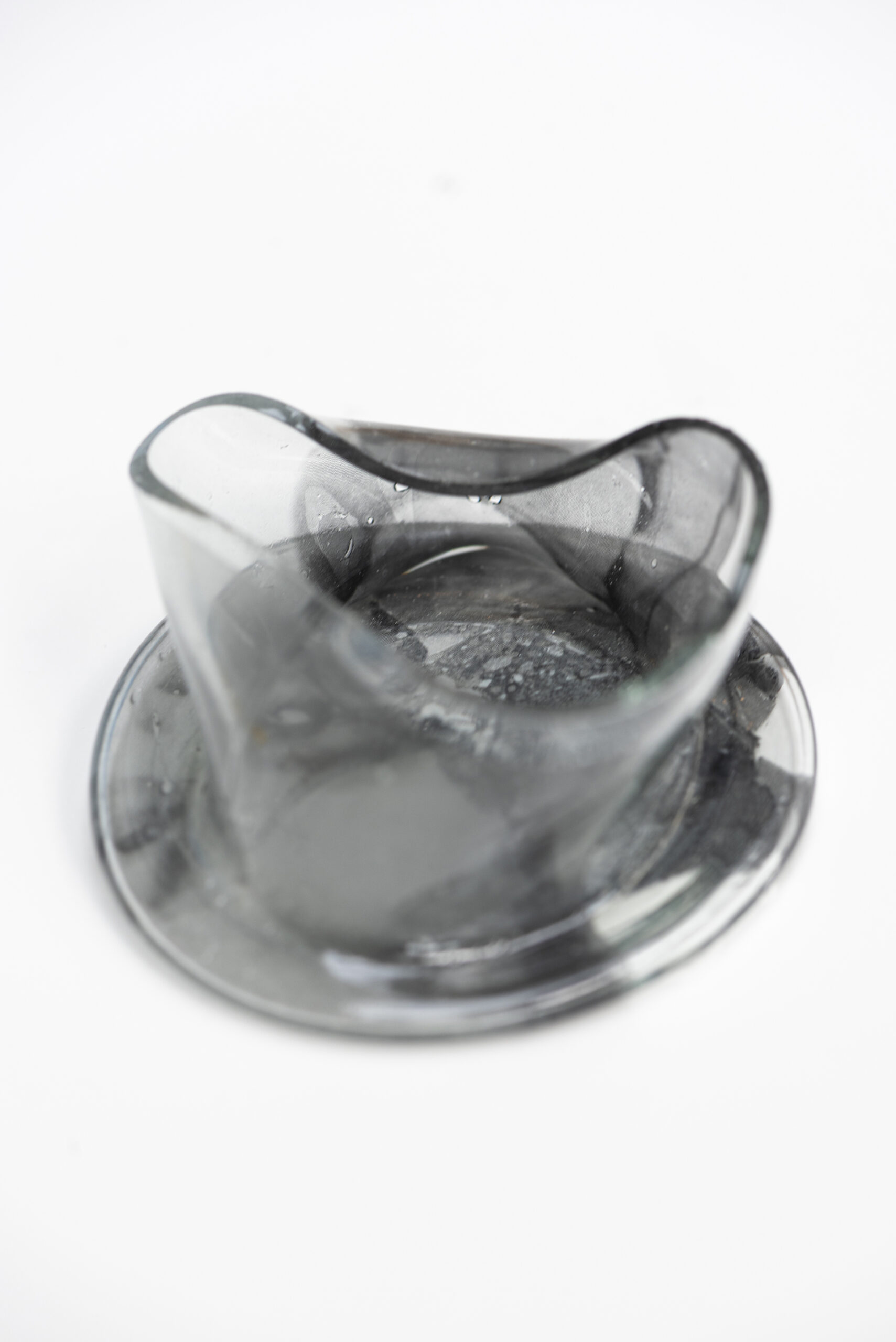
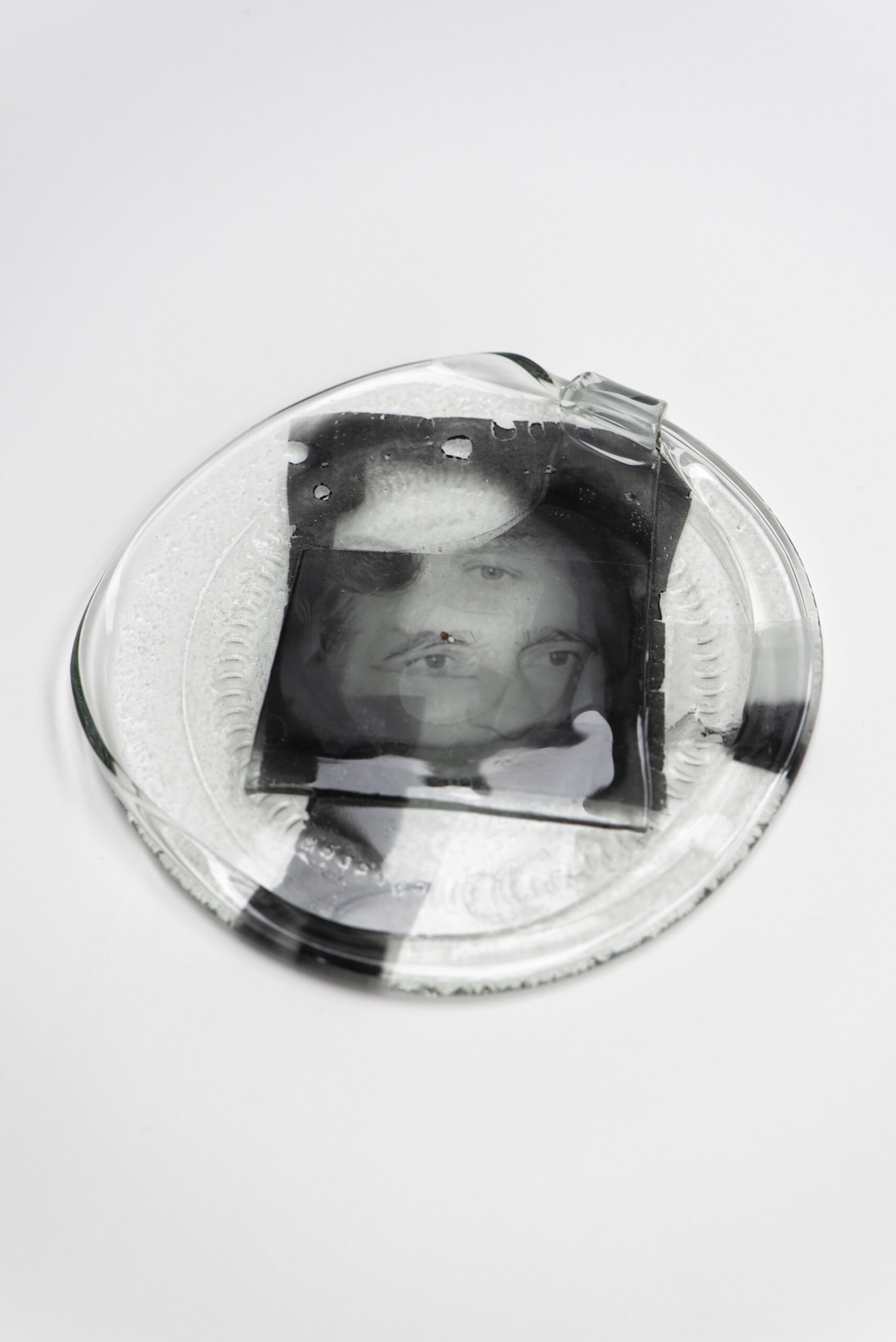
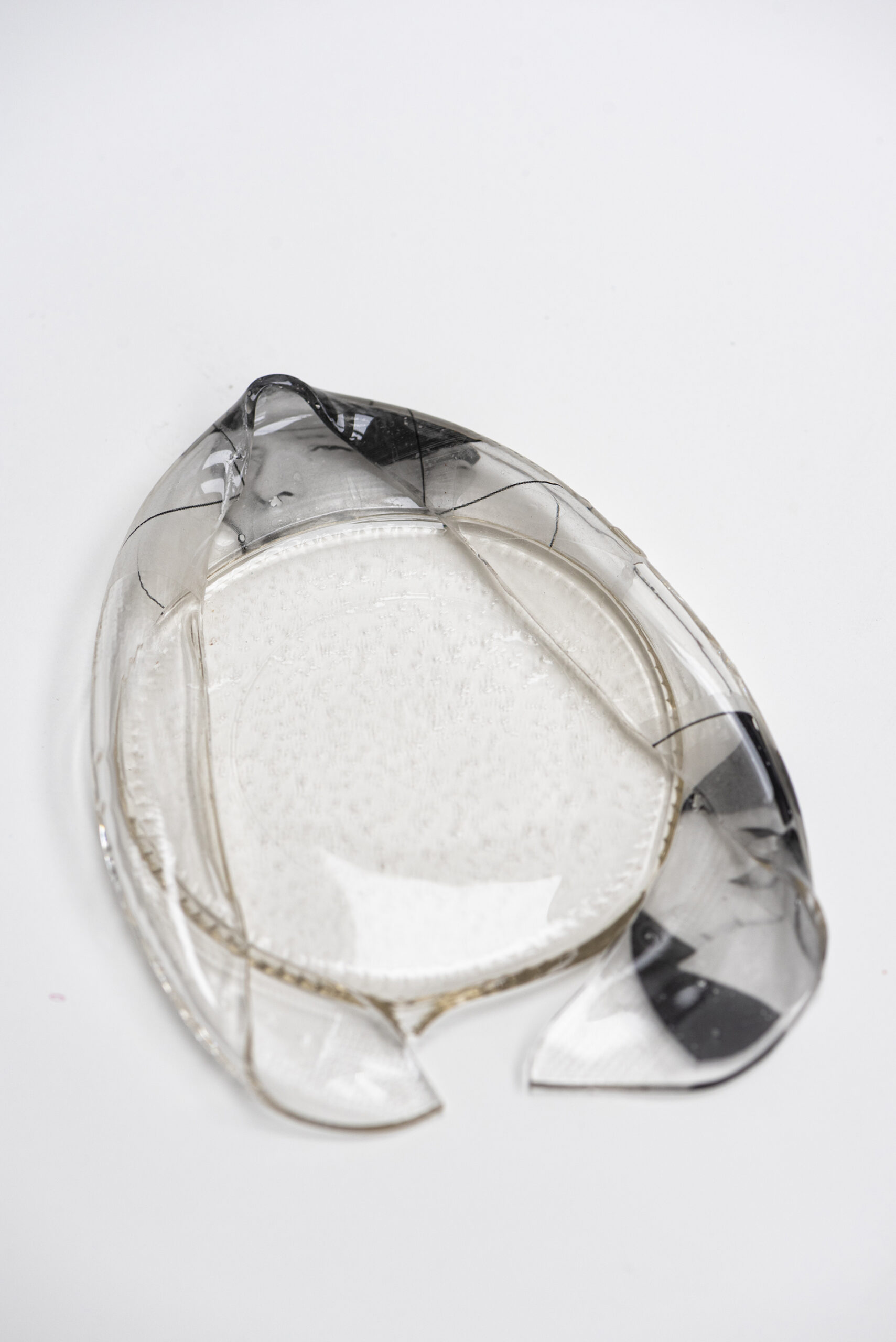
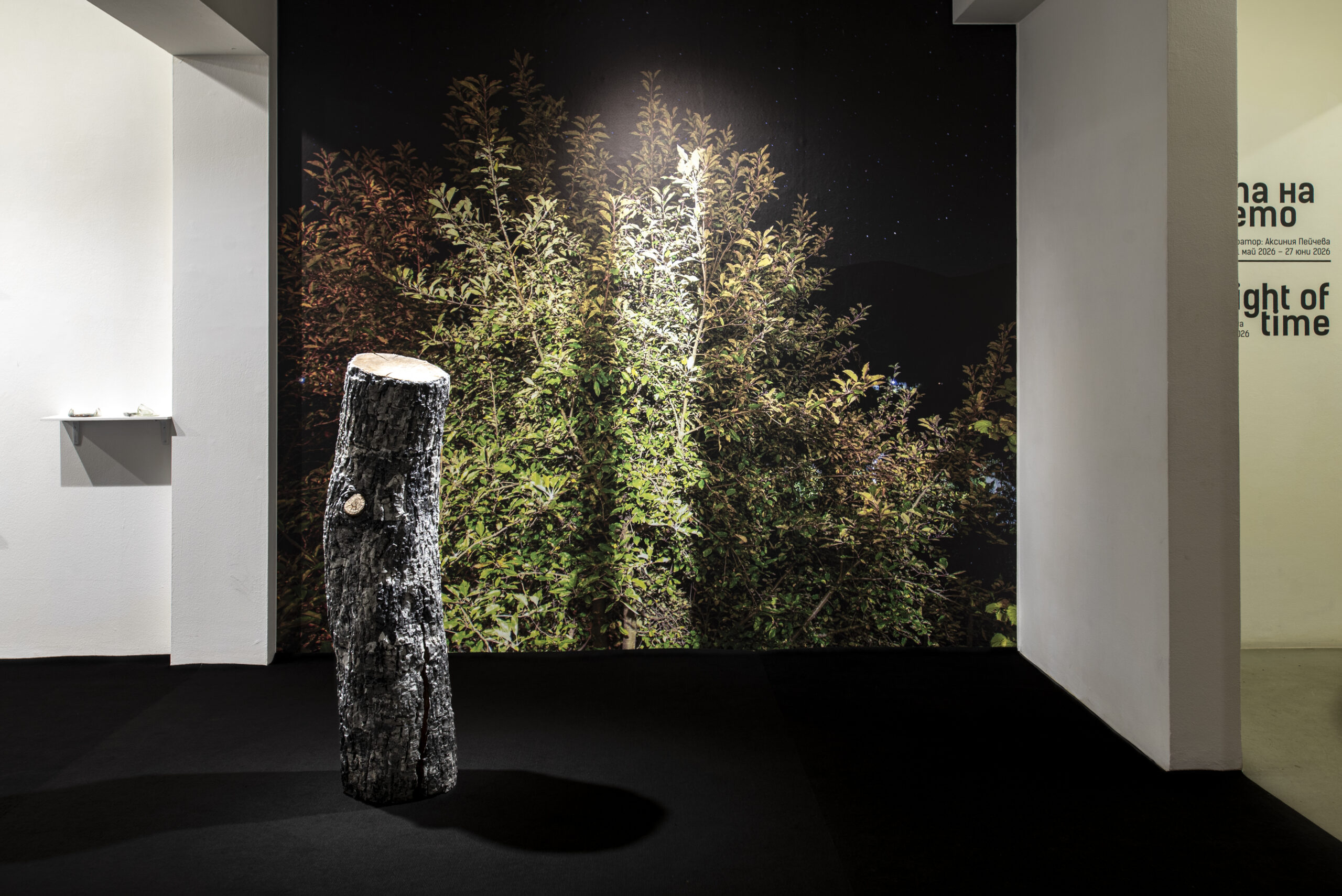
Photographic archives are adhered onto the surface of wood — branches cut from a pear tree in the family yard, transformed into “charred” vessels carrying several intertwined histories — deforming both themselves and the bark beneath them. Photographs of deceased strangers, originally intended to be placed on gravestones, are fired onto discarded glass objects and they literally melt across their surfaces, embedding themselves permanently into the glass. Photographs of the light left on for forty days after a person’s death, according to local custom, are transformed into a large-scale photographic wallpaper. All of these different “episodes” become woven into a shared narrative in which the objects no longer fulfill the functions for which they were originally intended. Instead, they are transformed into universal images inhabiting a liminal zone between death and life, memory and oblivion, existing within a time outside ordinary temporality. In this way, Radostin raises the question of separating memory from its original physical form: is it truly possible to safely extract and transfer memory onto an external carrier without compromising its integrity? In the presence of all these objects of memory, their dual nature becomes apparent — life itself begins to appear not eternal, but ephemeral. And perhaps this ephemerality is the only constant within the endless cycle of life and death that may have deserved preservation in the first place, while in truth having no need of it at all.
Aksiniya Peycheva